
Education in South Africa has a reading problem so severe that it should influence every serious conversation about schooling.PIRLS 2021 found that 81% of South African Grade 4 pupils could not read for meaning, placing the country among 57 participating countries − and poverty is not the only cause.
Education in South Africa Cannot Ignore What PIRLS Measures
PIRLS, the Progress in International Reading Literacy Study, measures reading comprehension: Can a pupil read a text and understand, interpret, and use the meaning derived thereof? That’s the difference between decoding symbols and learning through reading.
By Grade 4, schooling changes. Pupils stop learning to read and start reading to learn. If reading is weak at that point, every subject becomes harder. Studying History and Natural Sciences, correctly interpreting Mathematics word problems, understanding instructions, writing exams – it all depends on reading literacy.
That is why the literacy crisis in South Africa is not just a language issue, but a system-wide learning issue.
The Causes Are Structural, Not Accidental
One of the most uncomfortable truths in basic education in South Africa is that many children are not being taught to read with methods strongly supported by evidence. For years, South African classrooms have often leaned too heavily on whole-language or mixed approaches, where pupils are expected to infer patterns from exposure to books and print-rich environments, which may work for some pupils, but does not work reliably at scale.The research base is much clearer than the classroom reality. Children need explicit teaching in phonemic awareness, phonics, vocabulary, language comprehension, and fluency. The Simple View of Reading, one of the most useful models in literacy research, posits that reading comprehension rests on two pillars: decoding and language comprehension. If either is weak, reading for meaning suffers.
Overcrowded classrooms add to the problem. In many schools, teachers simply don’t have the time to listen to pupils read individually or track individual literacy weaknesses. So, a pupil can drift for months, even years, before anyone identifies the real problem.
It is Not “Just” Socioeconomic Status
Socioeconomic inequality unquestionably affects learning. It influences access to books, nutrition, transport, stability, and early childhood learning opportunities, but reducing the reading crisis in South Africa to poverty alone lets the system off the hook too easily.
Countries and schools serving children in challenging socioeconomic conditions often perform better than South Africa when their schools’ teaching methods are stronger and foundational literacy is prioritised. Poverty makes good teaching harder; however, it does not make effective reading instruction impossible. This distinction is important because hopelessness is a policy choice.
Effective Literacy Education in South Africa: What Actually Works?
Systematic phonics instruction works, especially in the early years. Regular individual reading assessment is effective because it reveals exactly where a child is struggling. Small class sizes can alleviate the issue because they make observation and intervention possible for teachers. Early support matters because reading gaps widen quickly.
The CAPS curriculum primary school framework makes room for foundational literacy, but the curriculum on paper is not the same as instruction in practice. If schools are serious about inclusive education in South Africa, literacy has to be at the centre of that commitment. A pupil cannot access the curriculum fully if reading remains locked.
Newton House Champions Reading Literacy with the ‘Stop, Drop, Read’ Initiative
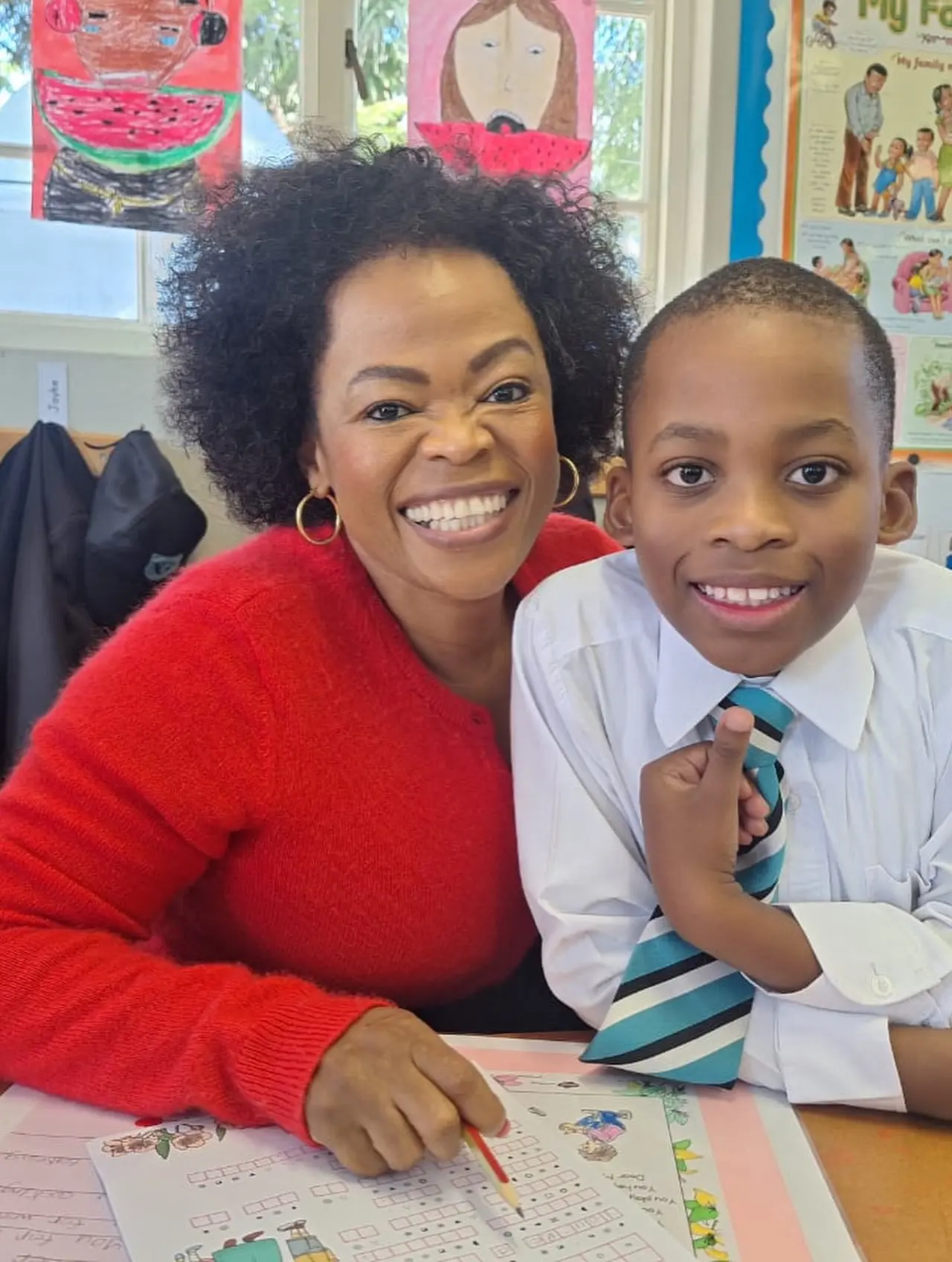
At Newton House, foundational literacy is approached with both structure and intentionality. Small classes of no more than 12 pupils allow teachers to engage directly with how each child reads, identifying gaps early, adjusting instruction, and ensuring no pupil slips through unnoticed. This individual attention is reinforced by the school’s ‘Stop, Drop, Read’ initiative, now in its fourth year, which embeds reading into the rhythm of the school day.
When the drum sounds, the entire school pauses for 15 minutes of reading, but the material is deliberately varied: pupils engage with everything from short stories and rhymes to menus, newspapers, and everyday texts. Combined with peer reading, teacher read-alouds, paired sessions, and audiobooks, the aim is not simply to build technical proficiency, but also to normalise reading as a meaningful, accessible part of daily life. This is not necessarily reserved for assessment, but it underpins learning itself.
The literacy crisis in South Africa will only change when schools teach reading explicitly and assist struggling readers early on. Education in South Africa needs enhanced reading instruction sooner, and in environments where individual pupils are seen, acknowledged and fully supported.
Newton House’s enriching learning environment offers pupils the opportunity to master reading literacy early on in their school careers. Learn more about our approach to education here.